
The Question Every Homeowner Asks First
When homeowners in La Jolla start thinking seriously about remodeling their kitchen, the first question is almost always the same: how long is this going to take? It's a fair question. The kitchen is the most-used room in most homes, and living without one — even temporarily — requires real planning.
The honest answer is that a typical kitchen remodel takes anywhere from eight to sixteen weeks, depending on the scope of work. But that range isn't very helpful without context. So let's walk through each phase of a kitchen remodel, what happens during it, and how long you should realistically expect it to last.
Phase 1: Design and Planning (2–4 Weeks)
Before anyone picks up a hammer, you need a solid plan. This phase includes your initial consultation, design development, material selections, and finalizing the scope of work. For many homeowners, this is the most exciting part — choosing cabinetry styles, countertop materials, fixtures, and layout changes that will completely transform how the space looks and functions.
In La Jolla, many homes have unique architectural details — mid-century layouts, Spanish Revival character, or coastal contemporary design elements. A good remodeling team will take the time to understand the existing character of your home and design a kitchen that feels intentional, not bolted on.
Pro tip: Don't rush this phase. Decisions made during design directly affect the budget and timeline. Changing your mind about a cabinet layout after demolition has started is far more costly than spending an extra week getting it right on paper.
Phase 2: Permitting (1–3 Weeks)
If your kitchen remodel involves structural changes, electrical upgrades, plumbing relocation, or modifications to gas lines, you'll need permits from the City of San Diego. The permitting process can take anywhere from one to three weeks, sometimes longer depending on the complexity of the project and the city's current backlog.
Many homeowners are surprised to learn that even seemingly minor changes — like moving a sink to a different wall or adding a new window — can require permits. A reputable remodeling contractor will handle the permitting process for you and make sure everything is up to code before work begins.
Does Every Kitchen Remodel Need Permits?
Not always. Cosmetic updates like painting, replacing countertops on existing cabinets, or swapping out hardware typically don't require permits. But if you're doing a full remodel with layout changes, new electrical circuits, or plumbing work, permits are almost certainly required — and skipping them can create serious problems when you eventually sell your home.
Phase 3: Demolition and Rough Work (1–2 Weeks)
This is where things get real. Demolition is fast and dramatic — your old kitchen comes out in a matter of days. After that, the rough work begins: framing modifications, plumbing rough-in, electrical wiring, and HVAC adjustments. If you're opening up a wall, adding an island with plumbing, or reconfiguring the layout, this phase is critical.
This is also the phase where surprises can happen. Older La Jolla homes sometimes reveal outdated wiring, corroded plumbing, or structural issues hidden behind walls. An experienced remodeling team will know how to address these issues efficiently without derailing the project.
Phase 4: Inspections (A Few Days)
Once the rough work is complete, a city inspector will need to verify that everything meets current building codes before the walls get closed up. This is a brief but important step. Your contractor should coordinate inspections so there's minimal downtime between phases.
Phase 5: Installation (3–5 Weeks)
This is the longest phase and where your new kitchen really starts to take shape. Installation typically follows this general order:
- Drywall and patching — Walls and ceilings are finished and prepped for paint.
- Cabinetry — Custom or semi-custom cabinets are installed, which forms the backbone of the kitchen layout.
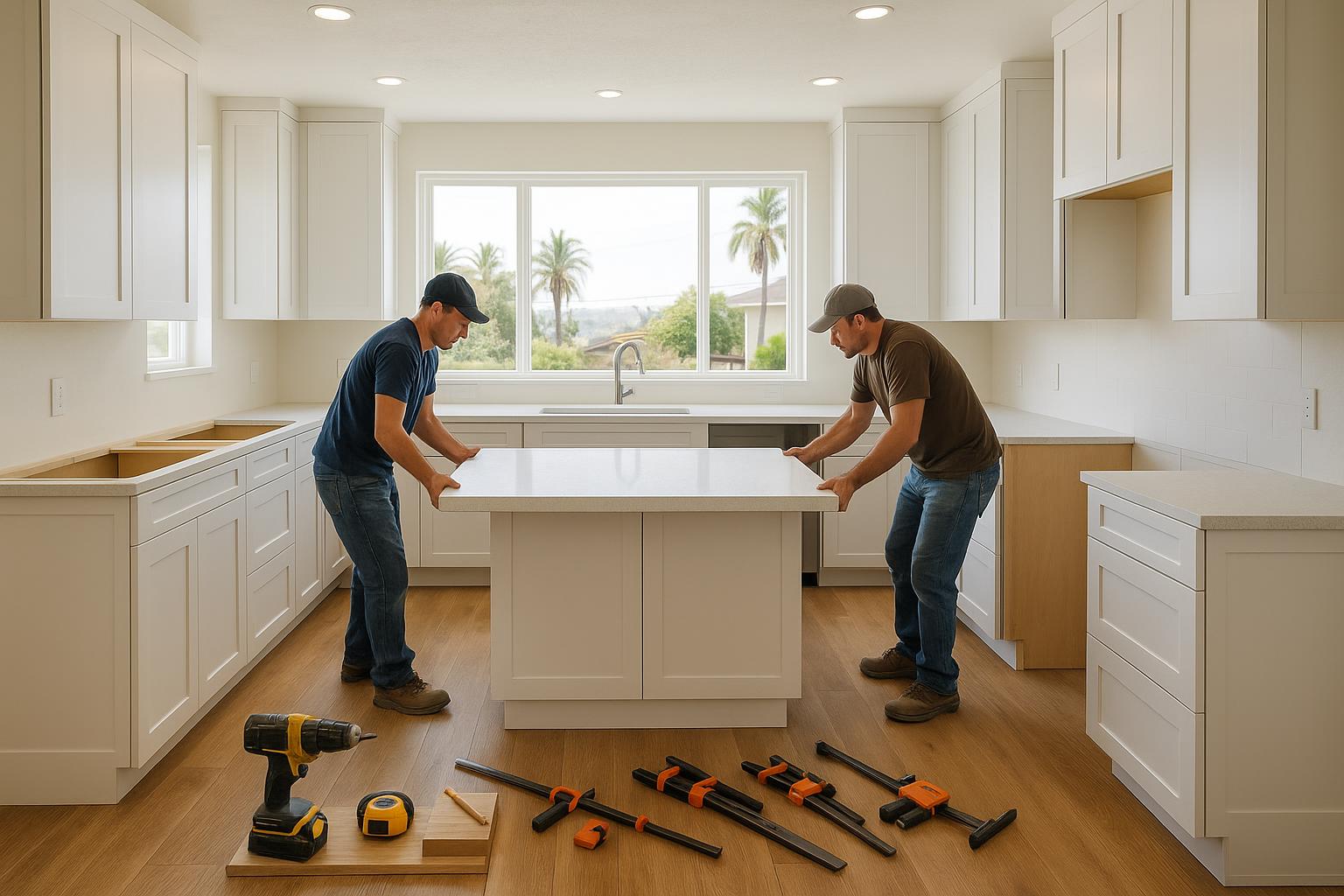
- Countertops — After cabinets are set, countertops are templated and fabricated. Natural stone and quartz countertops usually require a separate templating visit followed by installation a week or two later.
- Tile and backsplash — Backsplash tile goes in after countertops are set to ensure clean, precise lines.
- Fixtures and appliances — Sinks, faucets, lighting, and appliances are installed once the major surfaces are in place.
- Painting and trim — Final paint, trim work, and any remaining details are completed.
The installation phase requires careful coordination between multiple trades. Delays in material delivery — particularly for custom cabinetry or specialty countertops — are one of the most common reasons kitchen remodels run longer than expected. Ordering materials early in the design phase helps avoid this.
Phase 6: Final Walkthrough and Punch List (A Few Days)
Once everything is installed, you'll do a final walkthrough with your contractor. This is your chance to flag anything that needs adjustment — a cabinet door that doesn't close perfectly, a paint touch-up, a fixture that needs tightening. A thorough punch list review ensures you're completely satisfied before the project is officially complete.
What Can Extend the Timeline?
Several factors can push a kitchen remodel beyond the typical timeframe:
- Custom materials with long lead times — Imported tile, custom cabinetry, or specialty appliances can add weeks to the schedule if not ordered early.
- Structural changes — Removing load-bearing walls or reconfiguring the floor plan adds complexity and time.
- Unforeseen conditions — Hidden water damage, outdated plumbing, or electrical issues discovered during demolition.
- Design changes mid-project — Changing your mind about materials or layout after work has started almost always adds time and cost.
- Permitting delays — While generally manageable, permitting timelines can fluctuate.
How to Keep Your Remodel on Track
The best thing you can do as a homeowner is invest time upfront in planning and decision-making. Here are a few practical tips:
- Finalize all selections before demolition begins. This includes cabinets, countertops, tile, fixtures, appliances, and hardware.
- Set up a temporary kitchen. A folding table, microwave, electric kettle, and a mini-fridge in another room can make the process far more livable.
- Communicate regularly with your contractor. Weekly check-ins help you stay informed and address small issues before they become big ones.
- Build a buffer into your expectations. If your contractor estimates twelve weeks, mentally prepare for fourteen. It's better to be pleasantly surprised than frustrated.
Ready to Start Planning?
A kitchen remodel is one of the most impactful improvements you can make to your home — both in daily enjoyment and long-term value. At Heritage Home Extensions, we guide La Jolla homeowners through every phase, from initial design concepts to the final walkthrough. We believe that a well-planned project leads to a better result and a better experience.
If you're considering a kitchen remodel and want a realistic timeline tailored to your specific project, we'd love to talk. Reach out to our team for a consultation, and let's start turning your vision into a plan.